Divya Sridhar is the Director of Digital Equity Policy for ExcelinEd.


Though many states have taken quick action to provide internet and device access to students, the latest research from Common Sense Media found up to 12 million K–12 students remain under-connected.
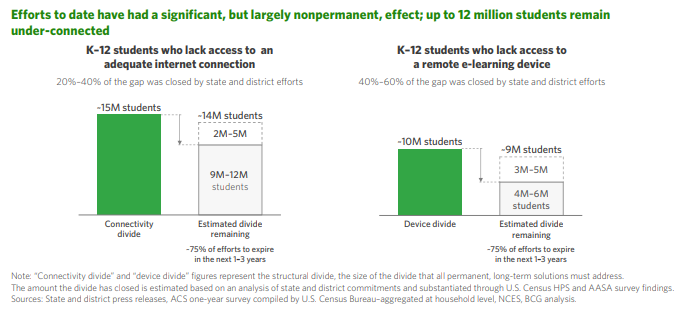
State efforts to promptly address the needs of students and families in response to the pandemic should be applauded, but it’s clear the work has only just begun. In fact, around 75% of state and local student digital divide efforts will expire in the next one to three years.
We recently talked about the importance of broadband access and here we will zoom (pun intended) in on the importance of 1:1 digital device access. To ensure continuity of learning, students must have a grade-level appropriate laptop, computer or tablet that is dedicated to their schoolwork – not merely a parent’s cell phone or a computer shared by the entire household. The consequences of being disconnected are clear.
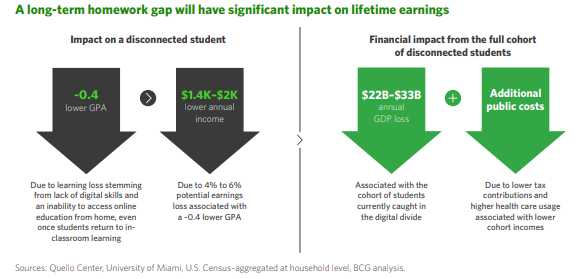
Now is the time to establish long-term policies and solutions to prevent further learning losses for students. States can take the lead through policy that supports districts and provide them flexibility to meet the needs of each school and its student population.
ExcelinEd has developed model policy, the Digital Devices for All Act, to support access to digital devices for all students through a state’s curriculum adoption process – a process that is coming up shortly, as many states finalize their budgets, mid-year.
The Digital Devices for All Act:
1) Ensures every student is connected to an internet-enabled, digital distance learning device for use at school and at home.
2) Determines priority for a device, specific to a student’s need for connectivity, devices and related services. The need for student digital devices relies on a data collection mechanism (see Digital Survey Access Act).
View MoreIn 2020, Mississippi leveraged $200 million in CARES Act funding to deliver 325,000 computers to students and teachers as part of the Mississippi Connects program. This year, the state considered solidifying the state’s commitment to meeting students’ digital learning needs. The proposed Digital Access Learning and Virtual Instruction Program would have required the purchase of an internet-enabled device for each student to be added to the state’s regular curriculum adoption process, along with textbooks and other instructional materials. Though the program did not come to fruition this year, Mississippi DOE continues to work toward a comprehensive, long-term approach to closing the digital divide.
Graphic Source: Ali, T., Chandra, S., Cherukumilli, S., Fazlullah, A., Galicia, E., Hill, H., McAlpine, N., McBride, L., Vaduganathan, N., Weiss, D., Wu, M. (2021). Looking back, looking forward: What it will take to permanently close the K–12 digital divide. San Francisco, CA: Common Sense Media.
