Melissa Canney is the Director of Innovation Policy for ExcelinEd.


For too many students, their K-12 experiences are disconnected from, or even counterproductive to, their long-term goals. Even as some states work to establish and expand access to high-quality education to workforce pathways, one of the most significant challenges lies in ensuring that students and their families know and understand the learning opportunities available to them. Equally important is that they are empowered to make informed decisions in navigating pathways leading to their postsecondary and career goals.
Our newest research, Pathways Matter to Families, offers insights about those most impacted by pathway opportunities and decisions: students and families. We engaged 1,141 parents and young adults to uncover what students and families have experienced in their current pathway opportunities. Policymakers and education leaders can utilize these insights to support and expand access to high-quality pathways and experiences.
Students and their families are making critical decisions right now about their future and the findings below can help state policymakers and education leaders understand what specific information students and families value.

Young adults are much less confident than parents that they will achieve their career aspirations, suggesting that their K-12 and postsecondary experiences may not meet their expectations.
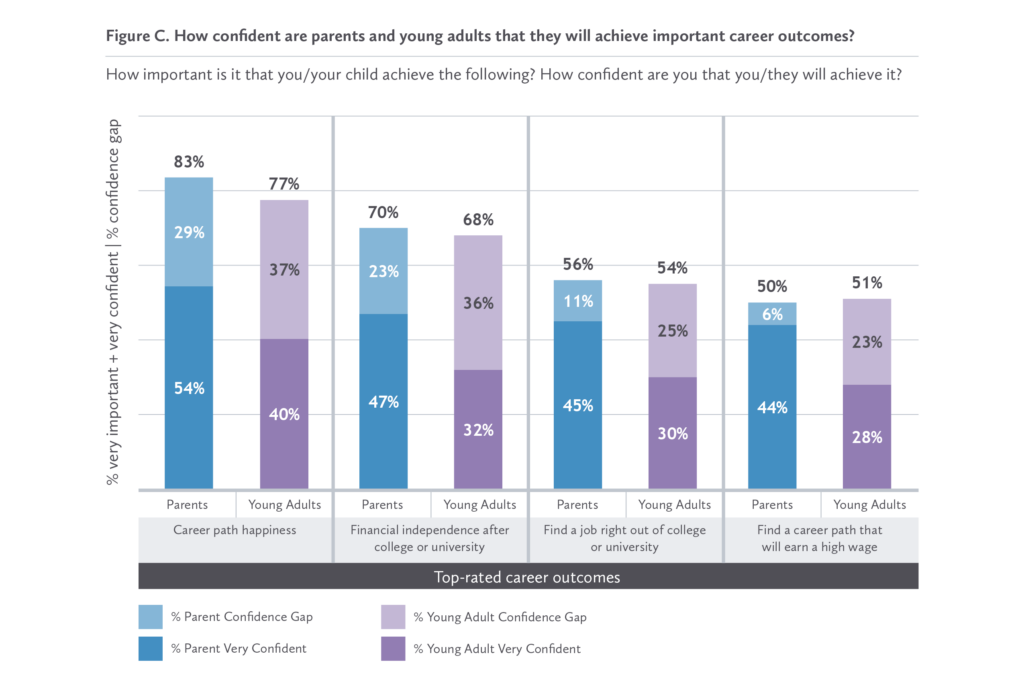
What is a confidence gap?
A confidence gap is the difference between the percentage of respondents that rate a career outcome as “very important” and the percentage that are “very confident” they will achieve that outcome.
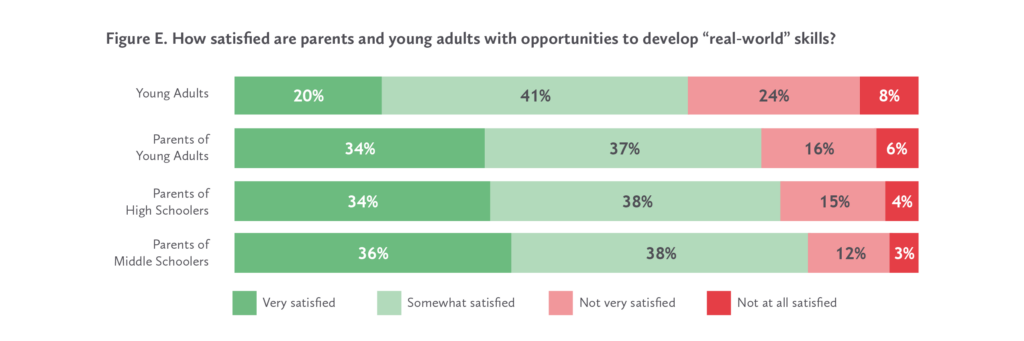
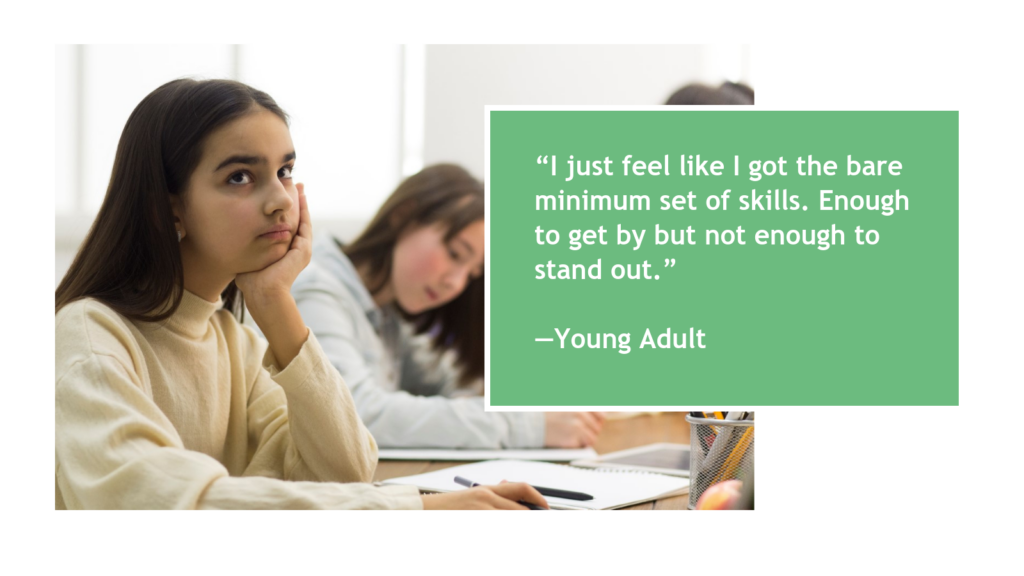

About 20% of parents and young adults are “not sure” or “don’t know” if CTE, work-based learning or industry-recognized credentials are available in their school or district. Even when parents and young adults are aware of different pathway opportunities, they do not believe that those opportunities are available to all students.
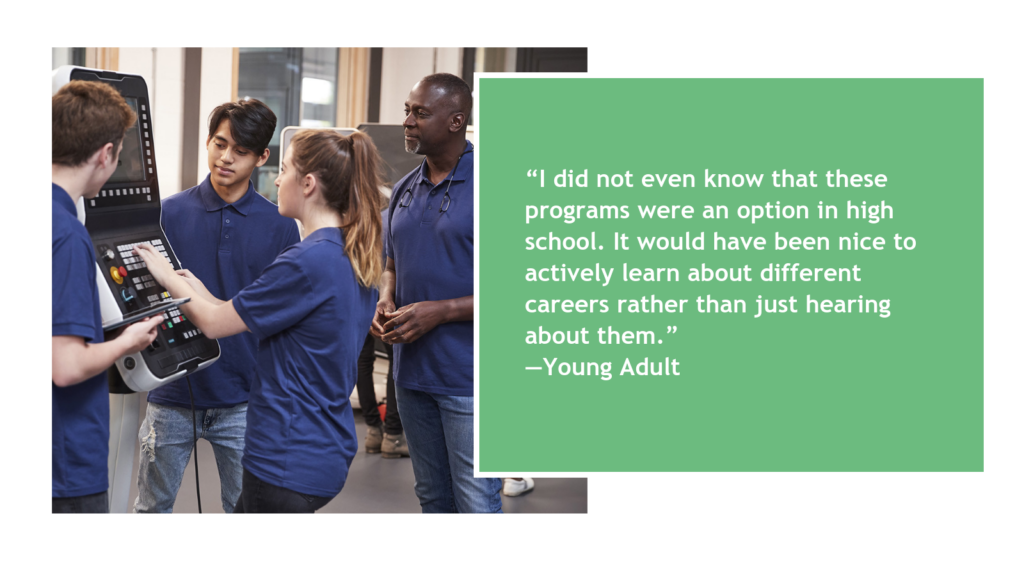
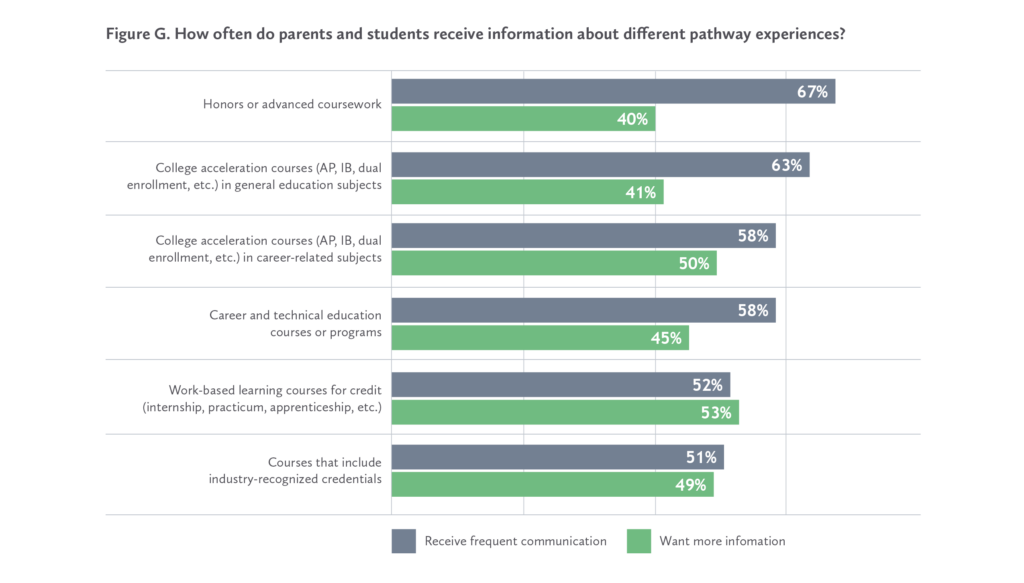
Parents and young adults indicated that schools most frequently communicate about honors or advanced coursework and college acceleration opportunities–but they want to learn more about career-focused educational opportunities, especially work-based learning and CTE.
Strong, coherent policies can make it easier for students and families to navigate a pathway that builds relevant skills, gains valued experiences and earns valued credentials across K-12, postsecondary and workforce systems. Many states’ education-to-workforce systems are still collections of misaligned and disconnected policies that fail to serve neither students nor employers well.
Policymakers, state and local education leaders, educators and families can all play a role in helping to improve students’ pathway options and educational journeys with the solutions below:

To learn more about the research, read the full Pathways Matter to Families report. Still have questions? Contact Melissa Canney at Melissa@ExcelinEd.org. We look forward to hearing from you.
