

Cara Candal, Ed.D., is the Vice President of Policy for ExcelinEd.


Over the past decade, the U.S. has seen a decline in enrollment in teacher preparation programs. This has resulted in an inability to adequately staff our schools—even when many school districts had declining enrollment.
Teachers qualified to teach students with special educational needs and English language learners are currently among the most difficult to find. So are teachers trained in STEM fields. And not surprisingly, school districts that serve concentrations of low-income students, plus urban and rural districts in general, experience the most pervasive teacher shortages. As a result, these districts are more likely to employ teachers with “emergency certifications” or place them in grades or subject areas they are not fully qualified to teach.
There is not one cure-all when it comes to building better pipelines into the teaching profession or to keeping our nation’s best teachers in the classroom. Instead, states can consider pursuing multiple policy options to reinvigorate this critically important workforce.
In 2022 and 2023, 16 states created federally registered teacher apprenticeship programs. These programs build on district-level initiatives that have existed for years. Apprenticeships provide a pathway for recent high school graduates and paraprofessionals currently working in schools to receive paid, on-the-job training that leads to a bachelor’s degree and teaching certification. Upon graduation, districts hire the new teachers they have trained.
While these local programs can work, relying on federal apprenticeship support and Title II funds isn’t enough. States can have some skin in the game, too. They can help districts draw down all available state and federal funds and also create grant programs to cover the districts’ “last dollar” costs. States can even consider providing extra stipends—incentives—for students willing to become certified teachers in high-needs areas, like special education and STEM.
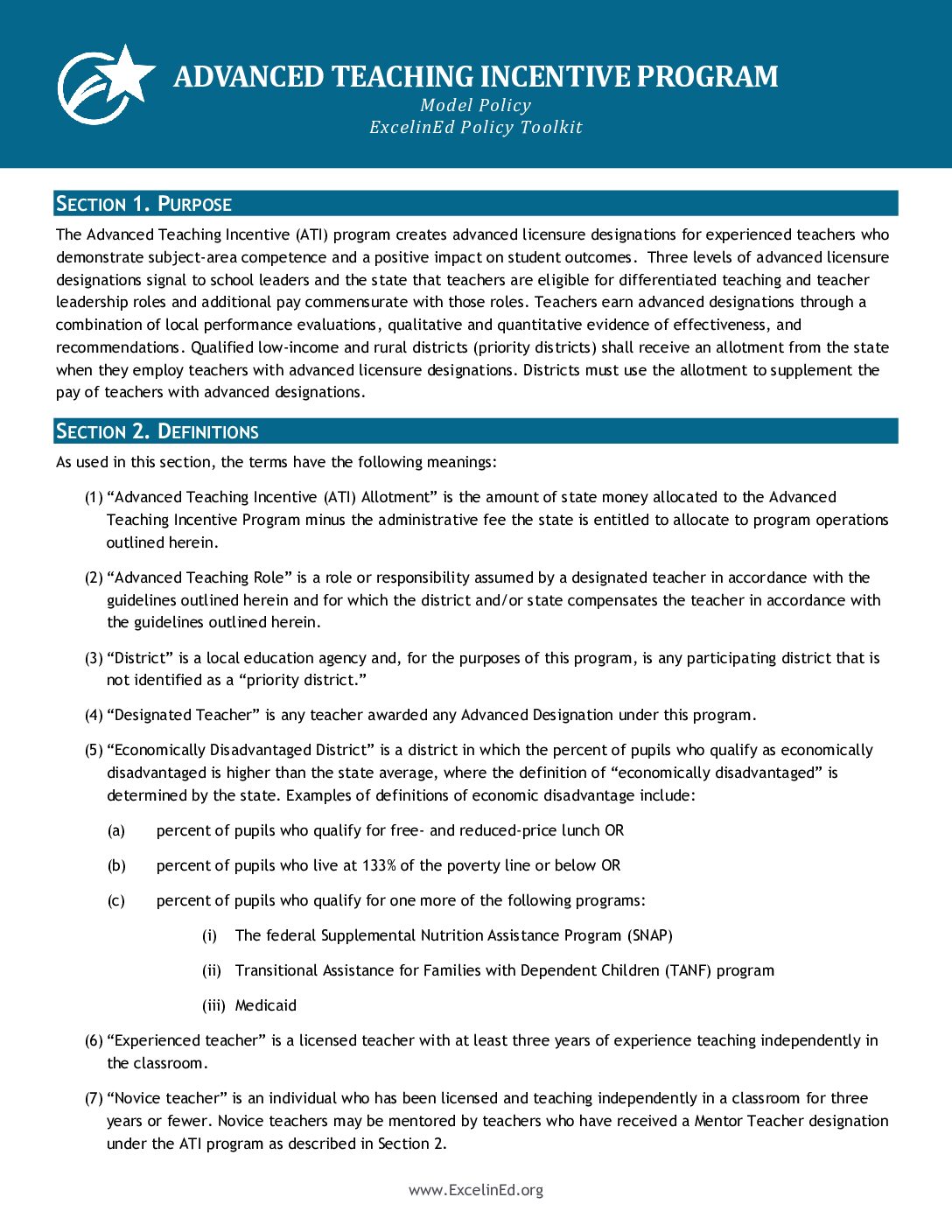
States can take steps to proactively retain strong teachers once they’ve invested in their development. Taking a cue from North Carolina and Texas, education chiefs can create advanced certification designations for teachers with outstanding evaluations. These certifications, which come with additional pay, indicate that teachers are ready for advanced responsibilities, such as mentoring apprentices or early-career teachers.
Advanced certification systems can also incentivize high-performing teachers to teach in districts where teacher shortages are high and/or academic outcomes are weak. Savvy states could give high-performing teachers an additional state-funded salary bump to teach in the districts that need them most.
As states build more diverse and robust teacher pipelines, they need to ensure that the preparation their teacher candidates receive is strong. Because teacher apprenticeships and residencies encourage on-the-job training, states or districts should seek to assess teacher competencies while candidates are doing the job. To achieve this, states can consider authorizing high-quality, competency-based education preparation providers to partner with districts offering grow-your-own programs.
States can also review current laws to ensure that antiquated regulations don’t exclude strong online providers from providing high-quality teacher training. In rural districts especially, online classes can encourage more people to participate in certification programs, because the time and cost associated with commuting to the nearest teacher training institution may be prohibitive.
Allowing certification reciprocity with other states is an easy way to get qualified teachers into the classroom. This can be accomplished through a blanket reciprocity agreement to accept credentials with similar standards or by entering into an Interstate Teacher Mobility Compact. Reciprocity is only one approach, however.
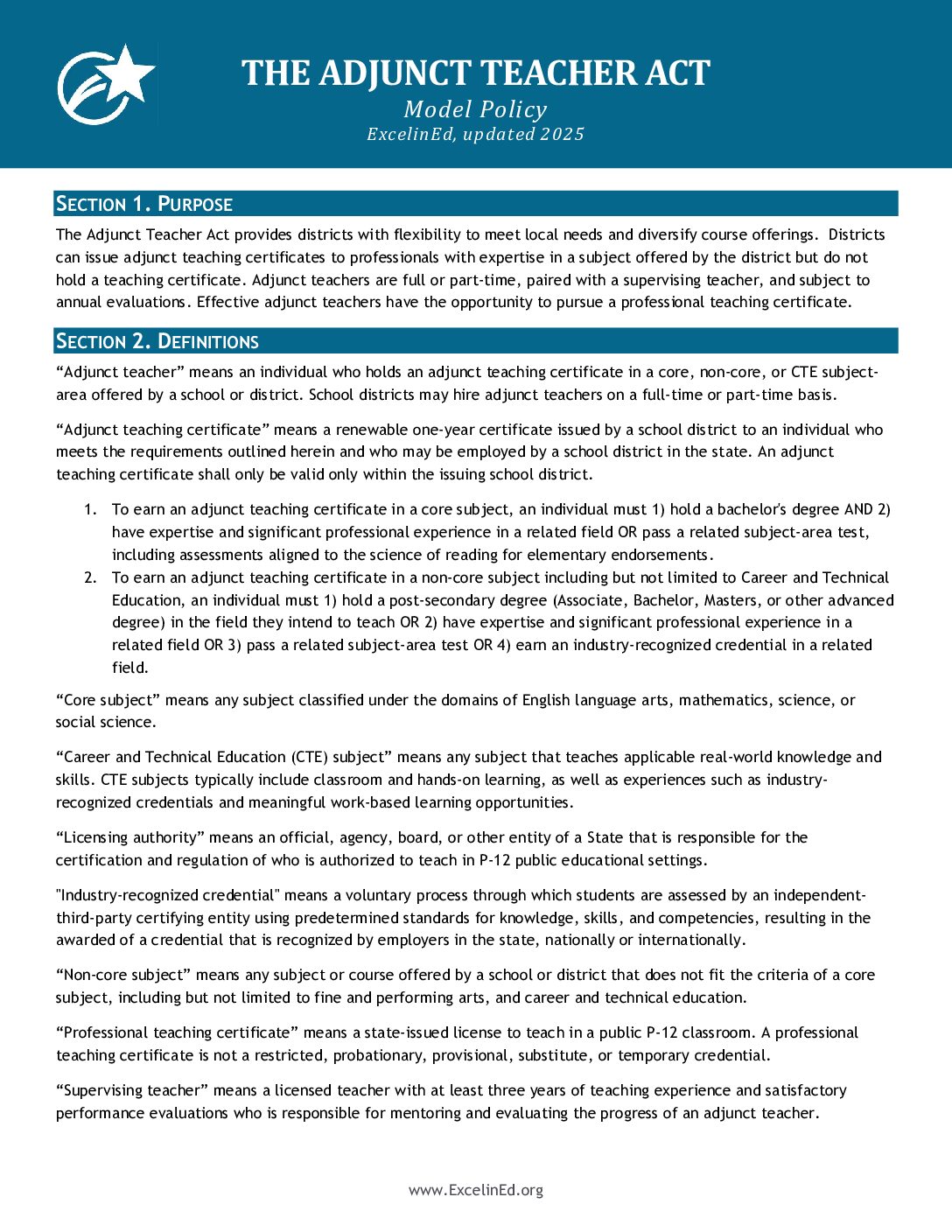
States and districts can also consider attracting baccalaureate-holding individuals with subject-matter expertise into K-12 classrooms. This can be achieved by waiving certification requirements and providing qualified individuals with the oversight and support of a mentor. For example, a practicing chemist, with appropriate support, could become a chemistry teacher, even working toward certification while teaching. This approach—called adjunct teaching—could work well in a variety of disciplines, from STEM to the arts.
Most states do not have reliable data on the extent and nature of their districts’ teacher shortages. Instead of predicting where shortages will likely occur and how large they will be, districts often report to states after they have been operating without sufficient staff for some time.
States also need better data about the supply of teachers graduating and coming into the workforce. According to a 2021 report from the National Center on Teacher Quality, only four states produce annual reports on teacher shortages, and only three states “make available supply and demand data that is disaggregated both at the district and certification levels.” States can work closer with educator preparation programs to track new graduates. With better data, state dashboards that display information on both teacher supply and teacher shortages, thereby providing districts with timely and valuable information for teacher recruitment.
