Teresa Lundgren is a Senior Policy Analyst at ExcelinEd.


Since the pandemic, we have been inundated with headlines of educator shortages across the country. Surveys have shown alarming projections of teachers leaving the profession, even as experts argued over whether there was a shortage or not. And now with ESSER funding ending, there is a fear about teacher layoffs, seemingly at odds with the many conversations about shortages.
Teacher shortages definitely are a complex issue. In this data-driven world, is there a way for numbers to tell the story more clearly?
The answer is a resounding yes. Educator shortages are real—but they aren’t everywhere, and they aren’t across all subjects.
While states can play a role by investing in programs that will make the teaching profession more attractive and sustainable, most states are working with incomplete information to make those decisions. Policymakers need to understand where teacher pipelines are “leaking” or even drying up before they can offer the right solutions.
Yet navigating the complex landscape of educator shortages and surpluses is a challenge. While most states have some supply-and-demand data available, few have enough to be actionable by schools, districts, departments of education and educators themselves—all of whom need this information to make informed decisions.
Fortunately, by analyzing supply-and-demand data, states can gain crucial insights into their teacher workforce, pinpointing specific areas needing attention and paving the way for informed solutions.

Watch our ExcelinEd webinar on “Cracking the Code: Leveraging State Data for a Robust Educator Pipeline.”
Schools and districts know how many teachers they have, in which grades and subject areas, and also how many teachers they need. Yet too often, they face a shortage of applicants for qualified positions. State-level policymakers can help by creating programs that encourage teachers to earn in-demand certifications or to teach in districts where shortages are dire. With the right information, states could even help districts share information, e.g., a district with too many candidates for one position could send qualified applicants to another locale.
This vision is not yet a reality because district data is not often collected and reported beyond the local level. Without a clear, state-level understanding of where shortages exist and whether our teacher pipeline can meet future demands, policymakers—including legislators and departments of education alike—are left scrambling for solutions with only partial information. At worst, they are completely in the dark.
Having access to comprehensive supply-and-demand data can illuminate this landscape, providing policymakers with the necessary data to make informed decisions. To successfully strengthen the educator pipeline, policymakers need answers to questions such as:
A 2021 policy brief from the National Council on Teacher Quality (NCTQ) evaluated states on the educator supply, demand, mobility and performance data that they collect, report, disaggregate and make publicly available. Across these metrics, NCTQ found that most states produced at least some data, but 10 states had none. Educator data, ranging from vacancies by district to retention rates by subject area, is essential, because a comprehensive data set lays the groundwork for informed decision-making.
State spotlight: Colorado checks all the boxes for high-quality teacher workforce data
Colorado is the only state that meets all of NCTQ’s recommended metrics for educator supply-and-demand data. Beyond simply collecting the data, Colorado’s interactive Graphic Information Systems maps provide clear, district-level visualizations. This makes its dashboard of data readily accessible to all stakeholders, and it covers a spectrum of teacher policy concerns, such as the number of new teachers graduating by EPP, teacher mobility/attrition and even housing affordability.
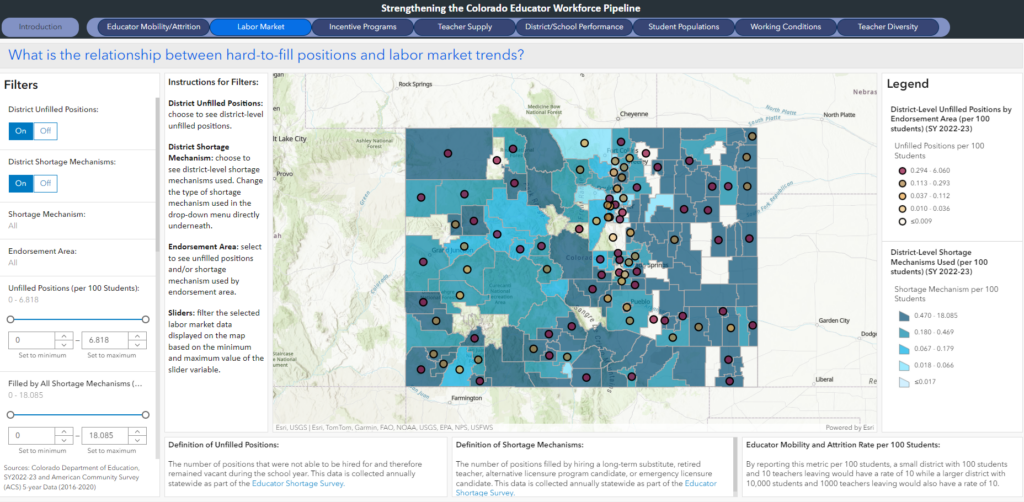
Although some states like Colorado have significant data on educator supply and demand, no state tracks this data longitudinally. Longitudinal data tracks individual educators’ progress over time—from training into the workforce and across jobs through their career.
As states invest in various approaches to educator recruitment and training, they are using strategies that range from undergraduate scholarships and registered apprenticeships to adjunct teachers and increasing license reciprocity.
Longitudinal data can help answer important questions about whether these programs are working and meeting their intended goals. For example, data on how many teacher candidates a school of education produces and in what certification areas might influence how/when/or where districts hire teachers. The quality of teachers produced by a school and the longevity of their service in the classroom could affect which programs prospective teachers seek out.
As a complementary practice, states can also use data available from jobs boards. A 2023 study from CALDER showed that studying district-level job postings can provide a state with data on which schools tend to have more, longer and mid-year vacancies. From there, policymakers and local administrators can learn and make decisions on equitable hiring and distribution of teachers.
A benefit of using job postings is that data are available in real time. To make data collection even simpler, state policymakers can consider following the example of Indiana and create a statewide educator jobs board. On this board, public schools post open positions and certified educators looking for a position can post their credentials.
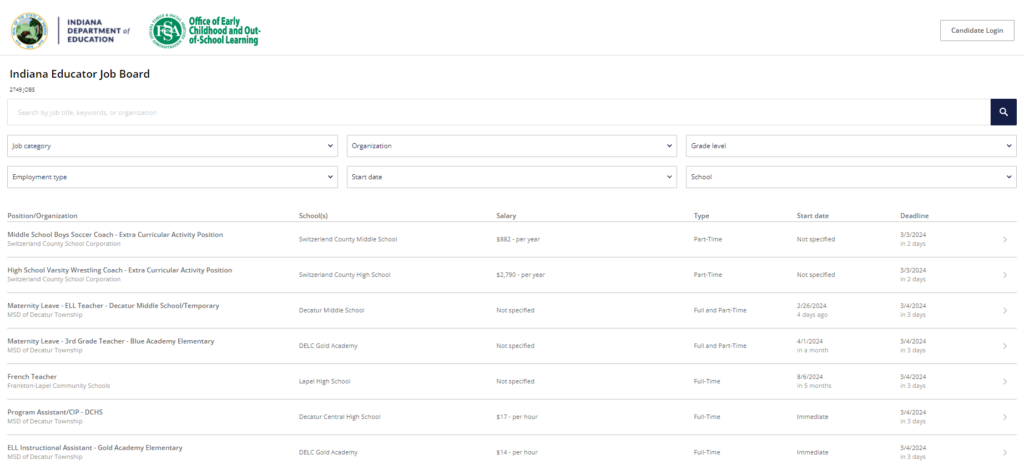
ExcelinEd’s model policy, The Educator Supply and Demand Dashboard Act, leverages this powerful dual approach, combining longitudinal educator supply-and-demand data with real-time job postings. While the longitudinal data offer insights into long-term trends and the efficacy of educational programs, the job postings provide real-time glimpses into current shortages and hiring dynamics.
Together, these components offer a holistic view of the educator landscape, supplying policymakers with the information needed to enact targeted solutions.
With so much conflicting information about shortages and potential layoffs, now is the time for states to enhance understanding of their educator workforce.
Data-driven education begins with the recognition that accurate, accessible information is the foundation upon which we can build better and more sustainable pathways for educators. Increasing access to both real-time and longitudinal data represents a crucial step forward in meeting this goal.
By harnessing the power of data, policymakers, districts and schools can work collaboratively to enact targeted solutions, ultimately laying the foundation for a brighter future for education.
