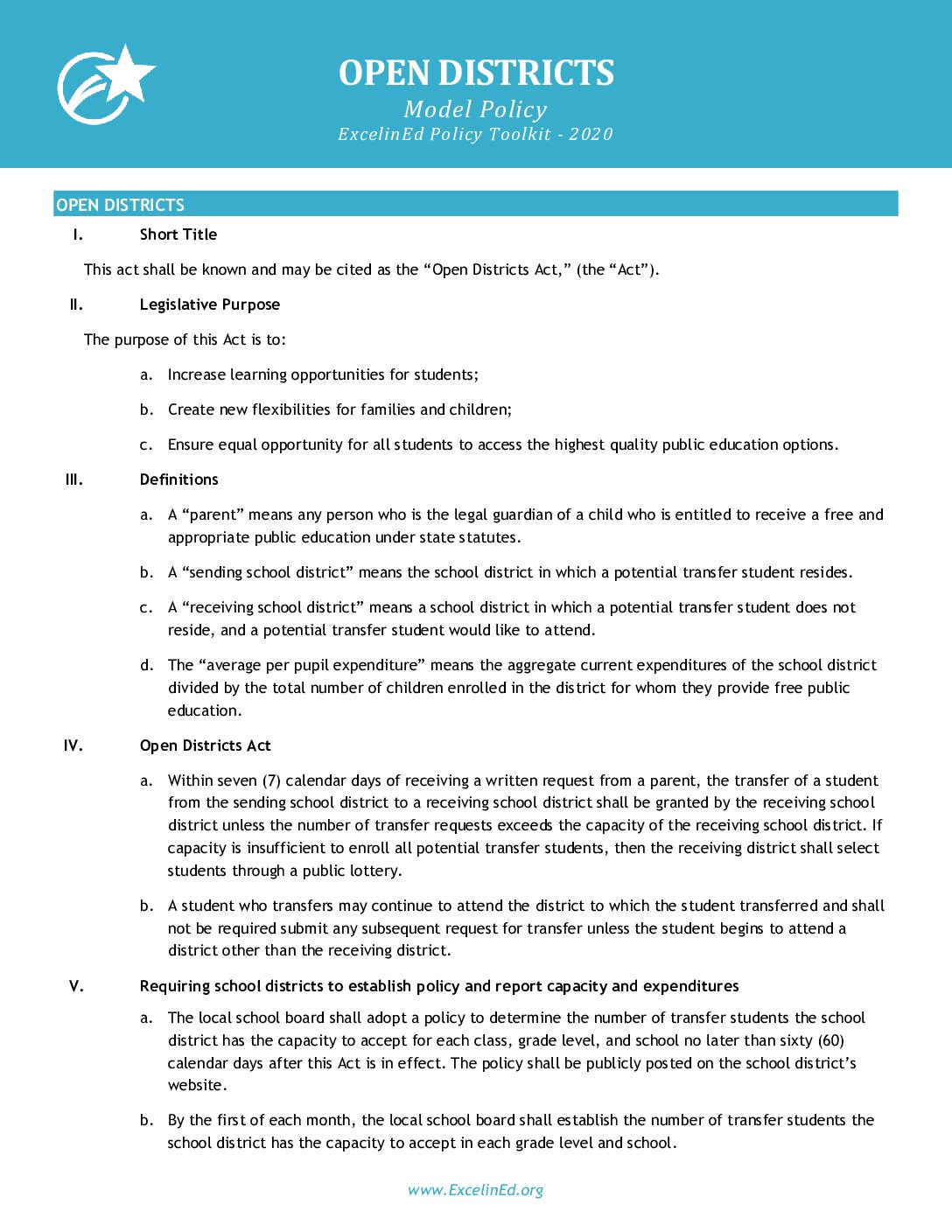
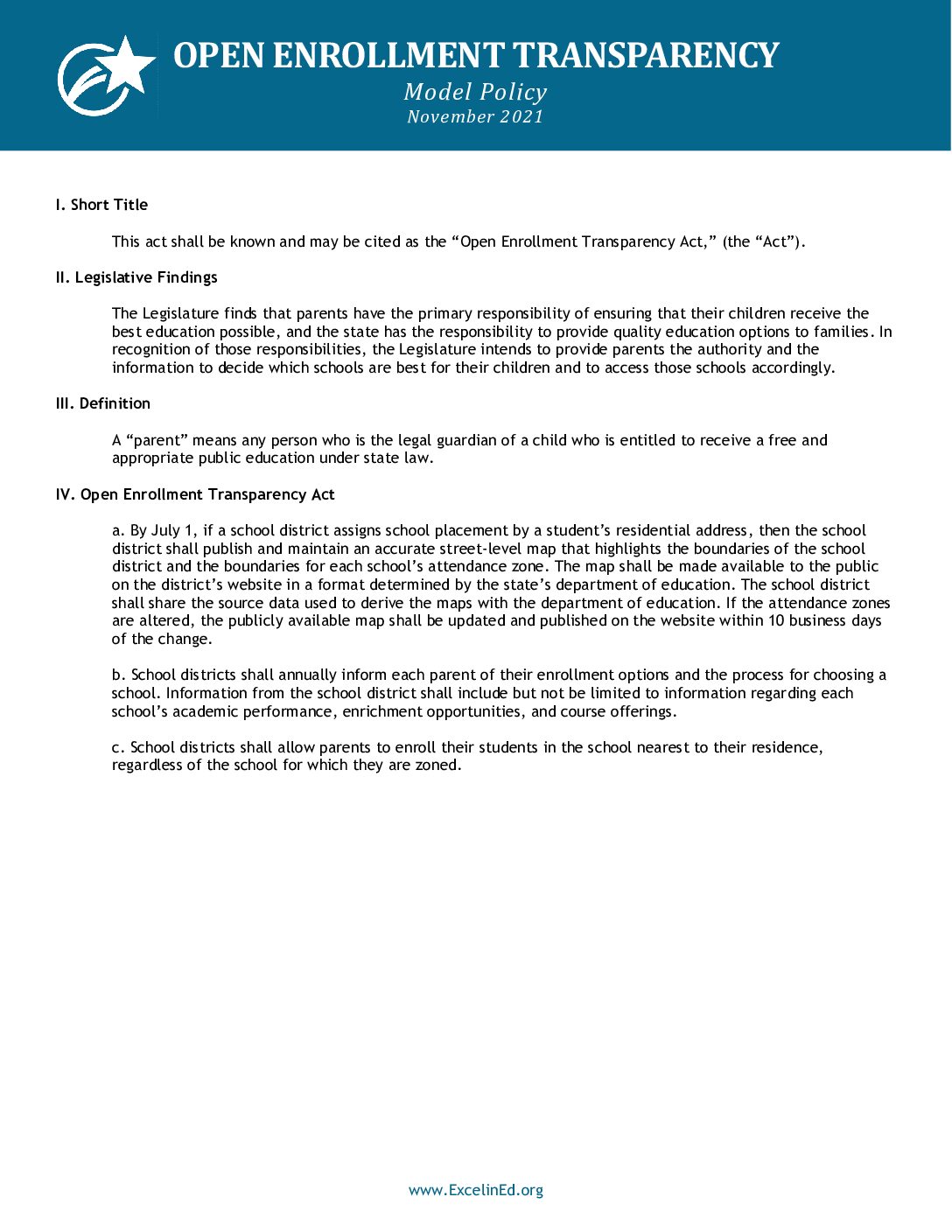
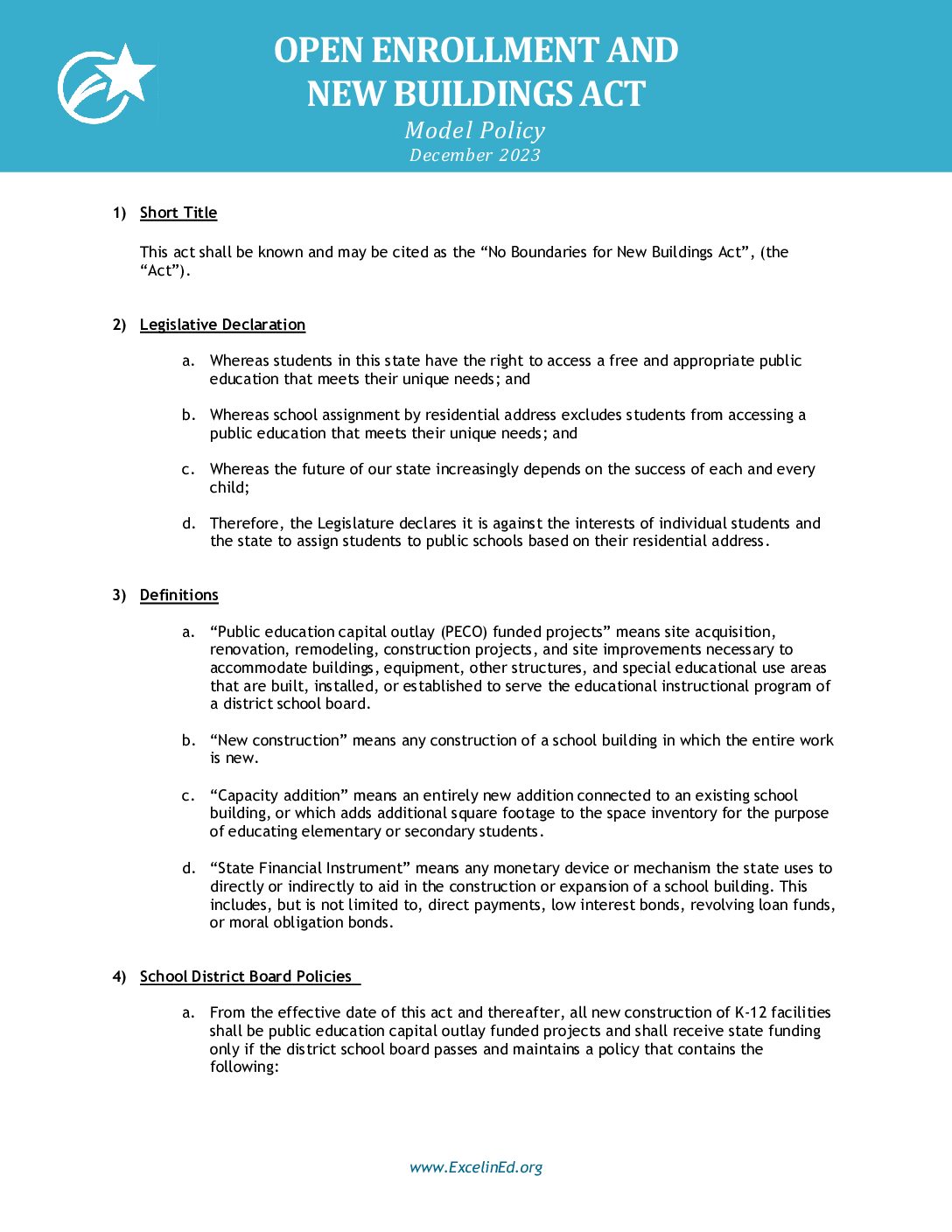
In addition to public education choice policies that can help expand access to charter schools, policymakers can consider further expanding public school choice through open enrollment policies. Open enrollment provides the flexibility for students to attend public schools—either full time or part time—outside of their residentially assigned attendance zone. Currently, forty-six states, plus Washington, D.C., have open enrollment policies.
School boundaries are lines designed to contain and control the mobility of students. A recent report from the Urban Institute, Dividing Lines: How School Districts Draw Attendance Boundaries to Perpetuate School Segregation, clearly indicates that these lines are drawn to maintain the exclusivity of certain public schools, specifically serving families who buy more costly real estate and pay tuition in the form of property taxes.
Policies that focus on educational opportunity and student success do not have boundaries. Instead, they break down outdated practices that restrict students to certain school zones, require certain enrollment qualifications and deny flexible access to public classrooms. Policymakers can expand opportunity in public education with several approaches to open enrollment.
Open enrollment may be voluntary or mandatory at the state or district level. Voluntary policies allow schools or districts to decide if they will accept students who live outside their boundaries. Mandatory policies require all districts to provide students the option to transfer and to accept students who request transfer.
Intra-district policies allow a student to request admission to a school outside their residentially assigned
attendance zone within the same district. Inter-district policies allow students to apply to schools across district boundaries within the same state.
With a part-time enrollment policy, students can access the courses they need from a provider that makes the most sense, parents have an increased amount of flexibility, and districts could see a funding boost while strengthening partnerships with community organizations.